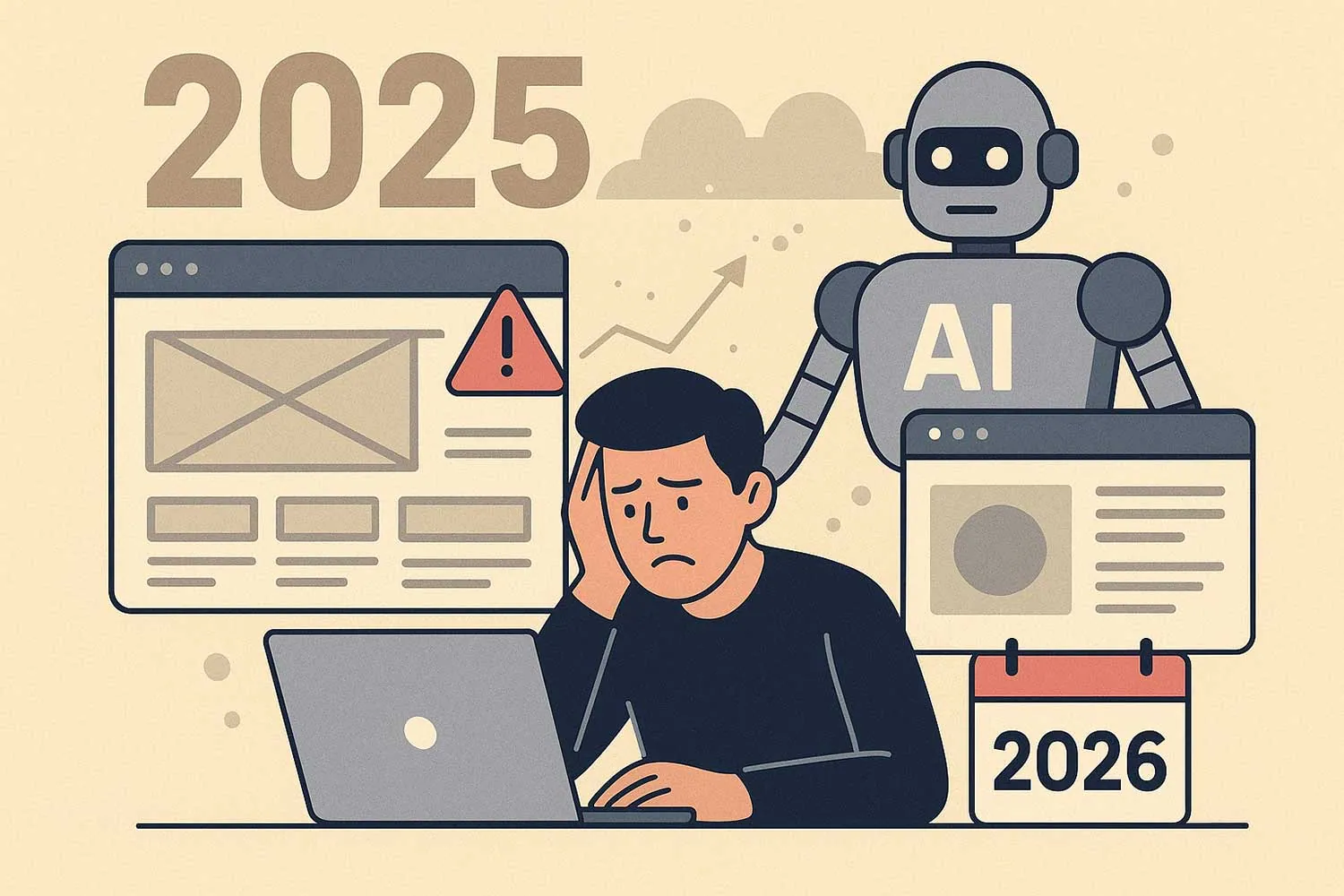
2025 was one of the most challenging periods for the web design industry, both in Indonesia and globally. Rapid changes in technology, above all increasingly capable generative AI, forced many in the industry to adapt at a pace never seen before.
Companies, small businesses and startups began to question large website design budgets when AI could produce layouts, visual concepts and even code instantly. This change in demand is why many web designers and web developers felt projects slow down throughout 2025.
AI played a dominant role in web design in 2025. AI tools could create prototypes from a text prompt, analyse users' visual preferences automatically and even optimise UX based on behavioural data. AI also sped up UI kits, wireframes, design systems, colour choices and graphic elements. On the development side, AI could write code, fix bugs and suggest code far faster than manual work. This brought big efficiencies to companies, but it was a challenge for traditional designers and developers who hadn't adapted.
The impact of AI in 2025 was mixed. On the negative side, many entry-level jobs, such as simple landing pages, slicing designs into HTML or basic templates, became rarer because AI could do them. Competition got tougher and market prices for simple services fell. On the positive side, AI brought major benefits: faster design production, lower operating costs, better quality and consistency, and the ability to analyse user data in real time to make more effective designs. The industry has become more focused on high-level creativity, strategy, branding and user experience that AI can't fully replace.
Heading into 2026, the industry needs to respond to these changes more adaptively. Web designers and developers should treat AI as a supporting tool, not a threat. Those who combine human strengths (creativity, intuition, communication and business understanding) with AI's speed and efficiency will be the most sought after. A focus on strong identity, deep personalisation, website security, performance, system integration and more emotional user experiences will be the key to success next year.
As part of this evolving industry, PT Yopdesign Creative Indonesia offers website development that combines experienced web designers and developers with modern technology. With a more strategic, creative approach that responds to developments in AI, Yopdesign is committed to delivering high-quality websites for companies that want to stay relevant and ahead in a constantly changing digital era.